Dear art lovers,
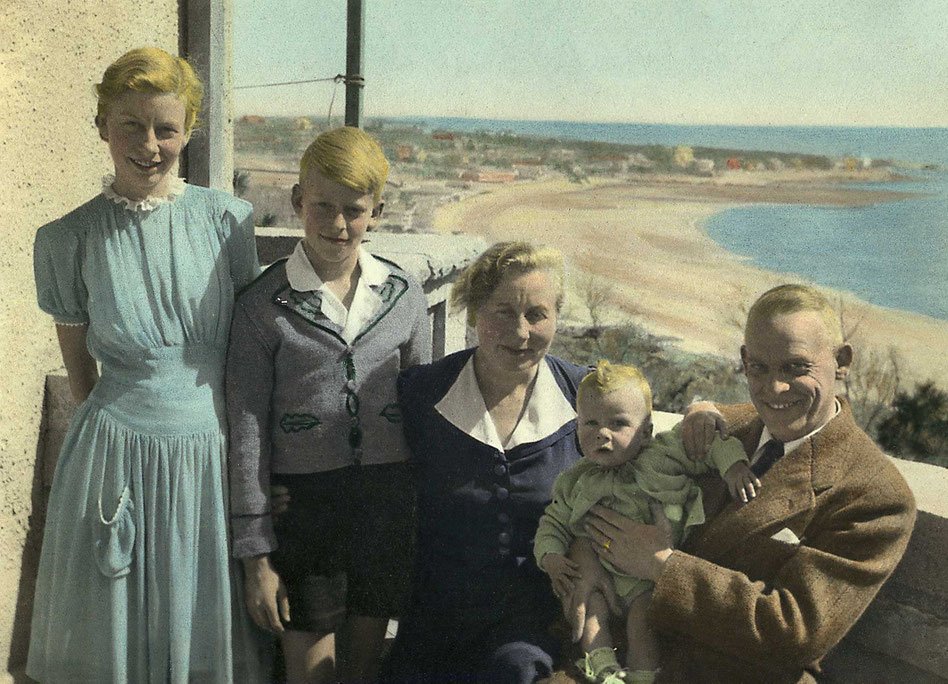
The economic depression after World War 1 drove the young Hamburg merchant Fritz Nauert far from home: China was the land of his dreams.
Around the same time, under similar circumstances, the eldest daughter of the well-known Ohlwein swimming family in Essen in the Ruhr region, Emilie, decided at the age of 21 to seek her fortune abroad as well: “China” sounded like an El Dorado — and a chance to provide help and support for her family of seven children back home.
China in the early 1920s was still deeply shaped by the almost medieval feudal structures of the recently ended Manchu Qing dynasty.“Warlords” — military strongmen securing their provinces, their districts, and their spoils. Every journey was an adventure in itself — a white woman seemed almost like a supernatural apparition to the people in the interior of the vast Chinese empire, especially when she became the first European woman to swim across the Yangtze River, more than 4 kilometers wide. It is here that the two — Fritz and Emilie — meet and decide to take their fate into their own hands together.
Success followed after a short time: industrial enterprises, a trading house, factory agencies, and collections of Chinese art. In this environment, Dierk Nauert was born in 1942 in Qingdao (Tsingtau), located in the former imperial German leasehold and naval base of Kiautschou, in Shandong Province on the East China Sea, at the foot of the Lao Shan mountains — the region that is also the birthplace of the philosopher and religious founder Confucius — and he grew up surrounded by this cultural setting.
In the late 1940s came the Communist Revolution, marked by Mao Zedong’s victory and the expulsion of Germans and other foreign nationals.
Return to war-devastated Hamburg, followed by relocation to Baden near Vienna in 1958. Completion of secondary education in Vienna and acquisition of Austrian citizenship. After military service — graduating as a reserve artillery lieutenant — he joined the China trading company Fuhrmeister & Co. in Hamburg and attended the Academy of Foreign Trade. Industrial and banking internships completed his training and led, in 1968, to an overseas assignment with the renowned Bremen trading company C. Melchers & Co. at its Hong Kong branch. Hong Kong, 1968 — the height of China’s “Great Proletarian Cultural Revolution.” Only the “Red Guards” — and a mere handful of “long-noses” (foreign traders) — were permitted to conduct business with the Chinese. Journeys into the “Middle Kingdom” during this time often took place under partly adventurous conditions. Before every negotiation, the works of Mao from the “Little Red Book” had to be studied and recited. Museums were stormed, temples and palaces plundered — we gathered and preserved whatever artworks and cultural treasures we could secure. Shipments were sent down the Pearl River to Hong Kong on sailing junks — and the idea of establishing an art dealership was born.
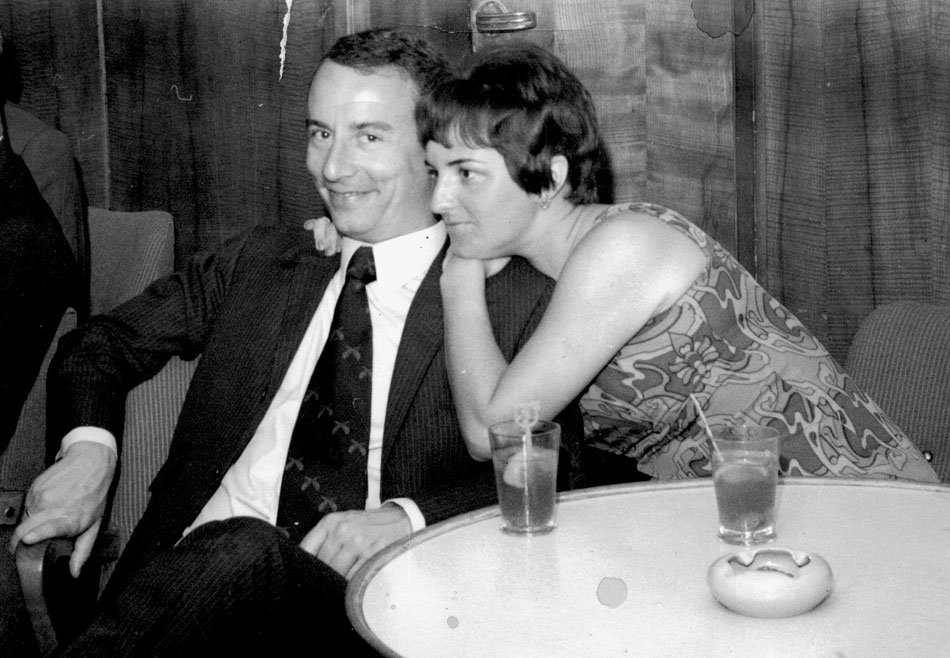
Alongside the business development came personal milestones: in 1968, he met Miss Linda Weber in Hong Kong. She comes from a long-established farming and artisan family from … a village in the Lower Austrian Tullnerfeld region. After language studies in England and France and entering the diplomatic service, she came to Hong Kong in 1966 as secretary to the Austrian Consul General. A shared interest in Chinese culture and art led to their marriage in 1970. Study trips to Macau, Cambodia, Burma, Thailand, Nepal, and India followed — and the idea of presenting authentic East Asian art in Vienna began to take clearer shape.
Since September 1970, the business has been located in Vienna’s 1st district at Stallburggasse 2, in a beautiful, historic Art Nouveau building.
(among others, the philosopher Wittgenstein, Federal Chancellor Dollfuss, and the singer Jeritza once lived here), along with active participation in major art and antiques fairs throughout Austria: the Salzburg Residenz, Vienna’s Messepalast and Hofburg, the Kursalon, as well as fairs in Graz, Linz, and Innsbruck, and the special exhibition of Asian art at Grafenegg Castle in Lower Austria. In 1990, he became a founding member of the Association of Austrian Art and Antiques Dealers and a pioneer of East Asian art in Austria. Alongside this, foreign trade activities with the People’s Republic of China were further expanded.
Here, too, we were pioneers from the very beginning — with up to six trips per year, maintaining contacts with all state trading corporations and ministries. Participation in the first Austrian Industrial Exhibition in Beijing in 1974, as well as in numerous official business delegations to China, followed. In 1979, participation in the Austrian Federal Economic Chamber delegation to the Mongolian People’s Republic in Ulaanbaatar led to the conclusion of the first trade agreement between the two countries. Overall, this resulted in major export successes for the Austrian economy, especially for the metal industry.
Through countertrade arrangements and our excellent contacts, we repeatedly succeeded in acquiring artworks and antiques, discovering unusual and rare pieces, and presenting them to the Viennese public. After more than 30 years of economic cooperation and friendly relations, we are regarded by our Chinese partners as “Lao Pengyou” — “old friends.” And in China, Dierk Nauert is known as “Lao Huli” — the Old Fox — and as the “White Chinese.”
Our love for Chinese culture and for the Chinese people — regardless of political developments — means we do not see our work as a passing trend, but as a lasting contribution to Vienna’s art, culture, and auction scene.
Yours sincerely,
The Nauert Family